
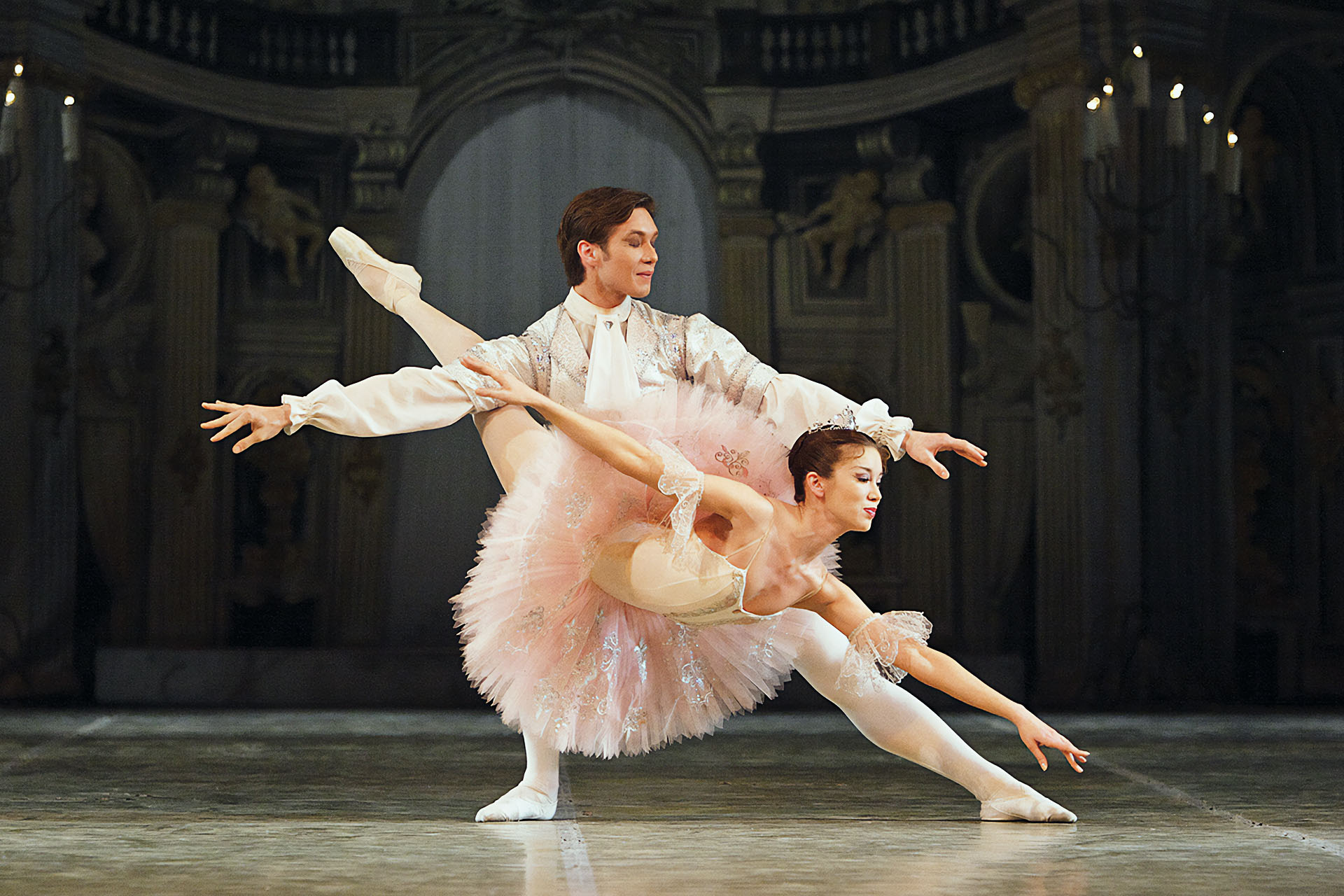
“The Good, the True, and the Beautiful.” If you are, like myself, someone who consumes a lot of Catholic online content, you will have come across these three Transcendentals (as they are academically termed) at least once or twice, perhaps from the mouths of Matt Fradd and Fr. Mike Schmitz,1 or other thinkers like Prof. Roger Scruton2 and Dr. Jordan B. Cooper.3 The Transcendentals are that which we aim towards, because they are qualities found in the divine. Heaven is “good, true, and beautiful.” The Church is “good, true, and beautiful.” We, if we become saints, become “good, true, and beautiful.”
The Transcendentals have their philosophical origin in Platonism, and it was not too long ago that they were discussed and debated about: by Marsilio Ficino in the 15th century, by the 3rd Earl of Shaftesbury in the first half of the 18th century,4 and by, of course, Immanuel Kant in the second half of the 18th century.5 Starting with these more recent philosophers — if one dares to call the Italian Renaissance and the Enlightenment recent —, a student of Philosophy could trace a line of Platonic thinking about the Transcendentals all the way back to Plato’s Timaeus,6 a dialogue which the medieval philosophers studied thoroughly.7 The Bibliothèque nationale in Paris holds one of its copies from the 9th century, three centuries before the University of Paris would give birth to Scholasticism.
When we speak of “the Good, the True, and the Beautiful,” many make the mistake of confusing them with the perfection of God. But what Ficino, the Earl of Shaftesbury, and Kant have in common is that they treated the Transcendentals in anthropological terms – or in other words, in how this triad relates to human nature. Even the Catechism of the Catholic Church does this, saying: “All creatures bear a certain resemblance to God, most especially man, created in the image and likeness of God. The manifold perfections of creatures – their truth, their goodness, their beauty all reflect the infinite perfection of God.”8 I want to make this clear because it is crucial to understand: that “the Good, the True, and the Beautiful” are not characteristics nor properties of God’s perfection, but reflections of it, reflections that we can everywhere observe in our world.
Most easily is this understood with the Beautiful, because beauty is everywhere in our world, be it in higher or lesser degrees. My graphic design teacher Mrs. Kong-Axtmann made beauty (or Schönheit, as we Germans call it) one criteria for her students’ graphic design work, because she knows that beauty attracts and arouses us, which are the exact effects a graphic designer wants to evoke. Beauty is everywhere. Beauty is an engine of our mutual attraction, of our sexuality, it is the artist’s ultimate goal (and the postmodern artist’s archenemy), it makes me tear up when I listen to Richard Wagner’s music, and it might make or may have made you tear up too. Miguel de Cervantes wrote that “Beauty of itself attracts admiration and love, and the royal eagles and other towering birds stoop to the tempting lure.”9 He wrote that, “Beauty has such power that it can awaken slumbering charity.”10 Yes, beauty can move mountains — because beauty is a reflection of God’s perfection.
I am glad to see, therefore, after a century of garbage being sold as modern or postmodern art, that beauty is becoming at once a value and a virtue in our society again. Public figures such as the aforementioned — Matt Fradd, Fr. Mike Schmitz, Prof. Roger Scruton, as well as Bishop Robert Barron, Dr. Adam Walker, and Michael Knowles — are all admirers of the classical expressions of beauty. During my graphic design studies in Germany in the Autumn of 2025, I was told by a Greek student named Alexia that she loved attending Greek Easter celebrations simply because the music — Greek Orthodox liturgical chants — was so beautiful. My colleague Sebastian loved being dragged to the Trier cathedral at the same time and for the same reason — because it is beautiful, and because beauty converts.
But the value of beauty and in beauty is not as self-evident as any sensible soul may assume it to be. The Protestant Reformation has in the 16th century reintroduced our Christendom to the iconoclastic tendency of rejecting beauty11 — the beauty of the Trier cathedral is matched by the ugliness of the Roman basilica in Trier, a Protestant house with echoing walls and empty halls —, the Industrialization around the 19th century did it again — think of cities such as Manchester, Chemnitz, or Essen —, and the Bolsheviks in Eastern Europe in the 20th century once more — think of the hideously Brutalist architecture in Berlin, Leipzig, or Warsaw. This war on beauty has been waged for centuries, up until today. And too often this rejection of beauty comes in the company of rejecting goodness and truth as well as beauty. This is why Bolshevism is not only ugly, but also false and evil, because it rejects all three Transcendentals.
We must therefore take up our weapons in this war on beauty. We must reconquer the world and make it beautiful again, make art beautiful again, make architecture beautiful again, make all sorts of things beautiful again — chants in our churches, cities not made of cold concrete but soaring spires, art that stirs the soul rather than shocks it. So pick up your brush, your pen, your instrument, or your screwdriver, and make the world a mirror of the divine, one beautiful act at a time. For in the Beautiful, as in the Good and the True, we glimpse until we gaze eternity. Amen.
*
* *
Signed Mannheim, November 1st, 2025. Published November 19th, 2025, the 66th birthday of Bishop Robert Barron.
- Ascension Presents, “The True, the Good and the Beautiful: A Lesson in Human Flourishing,” Apr 20, 2022, www.youtube.com/watch?v=HMWNjvTQnTU (accessed Oct 26, 2025). ↩︎
- Wheatley Institute, “Roger Scruton – The Good, the True and the Beautiful,” Apr 13, 2017, www.youtube.com/watch?v=10PG8VZiZaQ (accessed Oct 26, 2025). ↩︎
- Dr. Jordan B Cooper, “The True, the Good, and the Beautiful,” Nov 29, 2021, www.youtube.com/watch?v=Pzz1vQx8804 (accessed Oct 26, 2025). ↩︎
- Martin, John Levi, “The Birth of the True, the Good, and the Beautiful: Toward an Investigation of the Structures of Social Thought,” Reconstructing Social Theory, History and Practice, Current Perspectives in Social Theory, Vol. 35 (Emerald Group Publishing Ltd., 2017), 10. ↩︎
- Ibid. 38. ↩︎
- Plato, Timaeus 28a–31a. ↩︎
- At least the Latin translation of it. Burnet, John, Platonism (Berkeley: University of California Press, 1928), 1. It is also said that “St. Thomas [Aquinas] appears to have been more familiar with the Timaeus than with any other of Plato’s writings.” Rickaby, Joseph, Of God and His Creatvres, An Annotated Translation of the Svmma Contra Gentiles Of Saint Thomas Aqvinas (London: Burns & Oates, 1905), 120. ↩︎
- CCC 41. ↩︎
- Cervantes, Miguel de, Adventures of Don Quixote de la Mancha, trans. (Philadelphia: J. B. Lippincott & Co., 1869), 391. ↩︎
- Cervantes, Miguel de, “The Little Gipsy Girl,” The Exemplary Novels of Miguel de Cervantes Saavedra, trans. Walter K. Kelly (London: George Bell & Sons, 1881), 180. ↩︎
- See White, Hilary, “Heresy and Hammer: How Protestant Iconoclasm Became a Campaign of Destruction,” The Sacred Images Project, Oct 7, 2024, hilarywhite.substack.com/p/heresy-and-hammer-how-protestant (accessed Nov 1, 2025). ↩︎
